What Is a Backorder? What eCommerce Brands Should Do When Inventory Runs Out
ShipDaddy
October 16, 2026
Aliquam erat volutpat. Suspendisse potenti. Vestibulum sed diam ligula. Nulla cursus dignissim molestie. In luctus lobortis arcu, sit amet feugiat nunc blandit vel. Fusce elementum nisi purus, in malesuada nisi tincidunt sed. Duis libero dolor, congue et varius eu, placerat vel dui. Ut tempor augue vitae ex aliquam, non imperdiet augue pellentesque. Morbi in est cursus lectus molestie aliquam. Nunc quam orci, pharetra a ex ac, fringilla faucibus neque. Quisque ut dictum ex, finibus lacinia eros. Vivamus gravida ac velit nec molestie. Aliquam molestie nisl at justo sollicitudin, ut imperdiet lectus porttitor. Phasellus aliquet sapien ut libero mollis, sit amet fringilla augue bibendum.
Heading 1
Nulla congue libero eu libero efficitur, non fringilla dolor ultricies. Vestibulum ultrices augue vel est rutrum, eu semper odio blandit. Cras dignissim, risus in accumsan consectetur, orci urna efficitur nulla, at aliquam ante velit a lorem.
Heading 2
Nulla congue libero eu libero efficitur, non fringilla dolor ultricies. Vestibulum ultrices augue vel est rutrum, eu semper odio blandit. Cras dignissim, risus in accumsan consectetur, orci urna efficitur nulla, at aliquam ante velit a lorem.
Heading 3
Nulla congue libero eu libero efficitur, non fringilla dolor ultricies.
Heading 4
Nulla congue libero eu libero efficitur, non fringilla dolor ultricies.
Heading 5
Nulla congue libero eu libero efficitur, non fringilla dolor ultricies.
Heading 6
Nulla congue libero eu libero efficitur, non fringilla dolor ultricies.
Aliquam erat volutpat. Suspendisse potenti.
Heading 3
Fusce mollis posuere urna, at rutrum sapien tincidunt a. Praesent mattis mauris massa, vitae luctus nisi finibus eget. Ut scelerisque neque nisl, eget commodo lectus pretium non. Vestibulum ante ipsum primis in faucibus orci luctus et ultrices posuere cubilia Curae; Praesent ac libero malesuada, ultricies magna sit amet, tempor sapien.
Cras varius ultrices ipsum id dictum. Suspendisse tincidunt mauris ligula, et dictum diam molestie sit amet. Vivamus nec egestas neque, in finibus est. Vivamus pretium euismod tellus et porta. Mauris tempor dui est, nec cursus nunc vehicula vel. Nullam fermentum convallis urna sit amet pharetra. Morbi ex ipsum, aliquam in tortor in, ultrices pretium nunc. Nullam auctor euismod nunc, non ornare lectus fringilla id. Nullam lobortis pharetra libero at accumsan. Morbi finibus ex vel ligula faucibus malesuada. Mauris id facilisis velit. Aenean et vulputate leo. Morbi in massa accumsan, congue felis non, accumsan ante.
Fusce mollis posuere urna, at rutrum sapien tincidunt a. Praesent mattis mauris massa, vitae luctus nisi finibus eget. Ut scelerisque neque nisl, eget commodo lectus pretium non. Vestibulum ante ipsum primis in faucibus orci luctus et ultrices posuere cubilia Curae; Praesent ac libero malesuada, ultricies magna sit amet, tempor sapien.
Heading 3
Lorem ipsum dolor sit amet, consectetur adipiscing elit.
Sed hendrerit felis lacinia risus iaculis feugiat.
Aliquam in lectus ac metus consectetur pellentesque lobortis nec orci.
Nam nec tellus ullamcorper, consectetur massa in, tincidunt justo.
Mauris id facilisis velit. Aenean et vulputate leo. Morbi in massa accumsan, congue felis non, accumsan ante.
Lorem ipsum dolor sit amet, consectetur adipiscing elit.
Sed hendrerit felis lacinia risus iaculis feugiat.
Aliquam in lectus ac metus consectetur pellentesque lobortis nec orci.
Nam nec tellus ullamcorper, consectetur massa in, tincidunt justo.
Fusce mollis posuere urna, at rutrum sapien tincidunt a. Praesent mattis mauris massa, vitae luctus nisi finibus eget. Ut scelerisque neque nisl, eget commodo lectus pretium non. Vestibulum ante ipsum primis in faucibus orci luctus et ultrices posuere cubilia Curae; Praesent ac libero malesuada, ultricies magna sit amet, tempor sapien.
This is a quote block. Fusce mollis posuere urna, at rutrum sapien tincidunt a. Praesent mattis mauris massa, vitae luctus nisi finibus eget. Ut scelerisque neque nisl, eget commodo lectus pretium non. Vestibulum ante ipsum primis in faucibus orci luctus et ultrices posuere cubilia Curae; Praesent ac libero malesuada, ultricies magna sit amet, tempor sapien.
Cras varius ultrices ipsum id dictum. Suspendisse tincidunt mauris ligula, et dictum diam molestie sit amet. Vivamus nec egestas neque, in finibus est. Vivamus pretium euismod tellus et porta. Mauris tempor dui est, nec cursus nunc vehicula vel. Nullam fermentum convallis urna sit amet pharetra. Morbi ex ipsum, aliquam in tortor in, ultrices pretium nunc. Nullam auctor euismod nunc, non ornare lectus fringilla id. Nullam lobortis pharetra libero at accumsan. Morbi finibus ex vel ligula faucibus malesuada. Mauris id facilisis velit. Aenean et vulputate leo. Morbi in massa accumsan, congue felis non, accumsan ante.
A backorder happens when a customer orders a product that is temporarily unavailable but expected to be restocked. The business accepts the order now and fulfills it once new inventory arrives.
For eCommerce brands, backorders can help preserve sales when a popular product sells out. But accepting an order you can't ship right away changes the customer experience. You need a reliable handle on incoming inventory and a clear plan for communicating when the order will ship.
Here's what that looks like in practice.
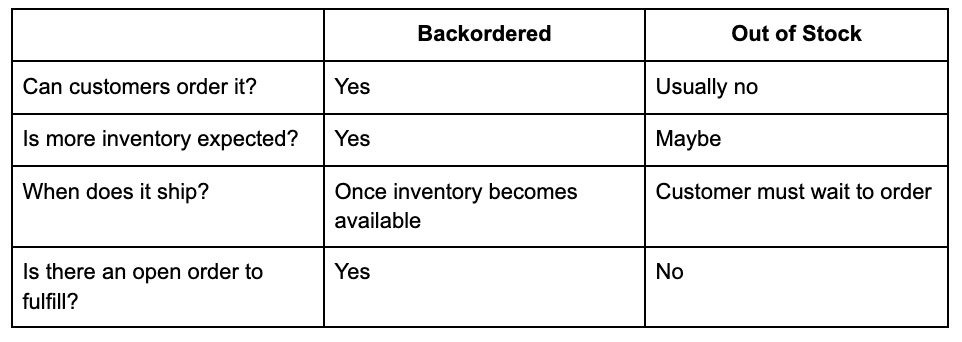
What's the Difference Between Backordered and Out of Stock?
Both terms mean you don't currently have inventory available to ship. The main difference is whether customers can still place an order.
Backorders work best when you know more inventory is coming and have a reasonable idea of when it will be available. If the restock date is uncertain, continuing to accept orders can leave customers waiting without a reliable delivery timeline.
Why Do Products Go on Backorder?
A product goes on backorder when customer demand exceeds the inventory available to fulfill it. That can happen because sales were stronger than forecasted, an inbound shipment was delayed, or inventory records didn't match what was actually available in the warehouse.
Selling through inventory faster than expected isn't necessarily bad news. If it happens regularly, though, it's worth looking at when you're reordering and how much visibility you have into available stock.
For brands selling across multiple channels, accurate inventory becomes even more important. You need to know what's actually available to sell before another order comes through.
Should You Let Customers Order Backordered Products?
Accepting backorders can make sense when more inventory is already on the way, and you can provide customers with a reasonable estimate of when their orders will ship.
Be clear about that timing before the customer checks out. Someone may be perfectly willing to wait a few weeks for a product they want, but they should know that's the deal when they place the order.
If the expected restock date changes, update customers promptly. Waiting until someone contacts customer service to ask where their order is puts your team on the defensive and makes a manageable inventory delay much more frustrating.
What Happens to a Backorder During Fulfillment?
When a customer places a backorder, the order remains open until inventory becomes available.
Once new inventory reaches the fulfillment center, it still needs to be received and entered into the inventory system before those units are ready to ship. Available inventory can then be allocated to waiting orders according to the brand's backorder process.
The details matter when an order includes more than one product. If three items are ready but one is backordered, will you ship what's available or hold the entire order? Splitting the shipment gets part of the purchase to the customer sooner, but it can also mean paying to ship the same order twice.
Deciding how you want those orders handled ahead of time gives your fulfillment team a clear process to follow.
How Can eCommerce Brands Manage Backorders?
Managing backorders starts well before inventory reaches zero. A few areas deserve particular attention.
Watch Inventory Levels and Reorder Early Enough
Your reorder point should account for how quickly a product sells and how long it takes to replenish.
If a product takes several weeks to manufacture and reach your fulfillment center, waiting until inventory is almost gone to reorder doesn't leave much room for delays. Build your lead time into the decision and pay attention when sales start moving faster than usual.
ShipDaddy clients can monitor inventory through our web-based software and receive stock replenishment notifications, giving teams a clearer view of when it's time to send more product.
Don't Treat Inbound Inventory as Available Inventory
A shipment that's expected to arrive on Tuesday isn't necessarily ready to ship to customers on Tuesday.
Inventory has to reach the warehouse and move through receiving before it can be used to fulfill orders. Freight delays or receiving issues can push that timeline back, so customer estimates should leave enough room for the inventory to actually become available.
Make Backorder Status Clear to Customers
Customers shouldn't have to hunt for information about whether a product is ready to ship. Make the backorder status clear on the product page and provide an estimated shipping timeframe when you can.
If that estimate changes, be sure to tell them. Clear communication won't make inventory arrive faster, but it can make the wait much easier for the customer and build better long-term relationships for the brand.
Can Better Inventory Management Prevent Backorders?
Better inventory management can reduce backorders caused by poor visibility or ordering too late, although no system can prevent every stockout.
Accurate inventory counts help you understand how much product is available right now. Pair that information with sales trends and supplier lead times, and you can make better decisions about when to reorder.
Seasonality deserves extra attention. Inventory that comfortably covers a month of normal sales may disappear much faster during a holiday rush or successful promotion. Looking ahead at what's coming for the business is just as important as looking at what sold last month.
Are Backorders Bad for Your eCommerce Business?
An occasional backorder isn't automatically a problem. A popular product may simply sell faster than expected.
Frequent backorders are more concerning, particularly when customers regularly receive inaccurate availability information or shipping estimates. At that point, it's worth finding out where the gap is coming from.
Maybe inventory is being reordered too late, or supplier lead times may have changed as the brand has grown. Understanding the cause gives you something useful to fix instead of treating each backorder as an isolated issue.
How Can a 3PL Help Manage Backorders?
A 3PL can help by maintaining accurate inventory records, receiving new stock efficiently, and giving your team visibility into what's available at the fulfillment center.
At ShipDaddy, eCommerce stores connect directly to our web-based software so clients can oversee their orders and inventory in one place. Replenishment notifications help flag when stock is getting low, while our warehouse team handles receiving and fulfillment when new inventory arrives.
You also have a dedicated account team available through Slack. If you need to know what's happening with an inbound shipment or have a question about inventory, you know exactly who to ask.
Stay Ahead of Your Next Stockout
Backorders are much easier to manage when you know what's in stock, what's running low, and what's coming next.
If keeping up with inventory and fulfillment is becoming harder as your business grows, talk with our team at ShipDaddy to learn how outsourced eCommerce fulfillment can give your team better visibility and take the day-to-day fulfillment work off your plate.